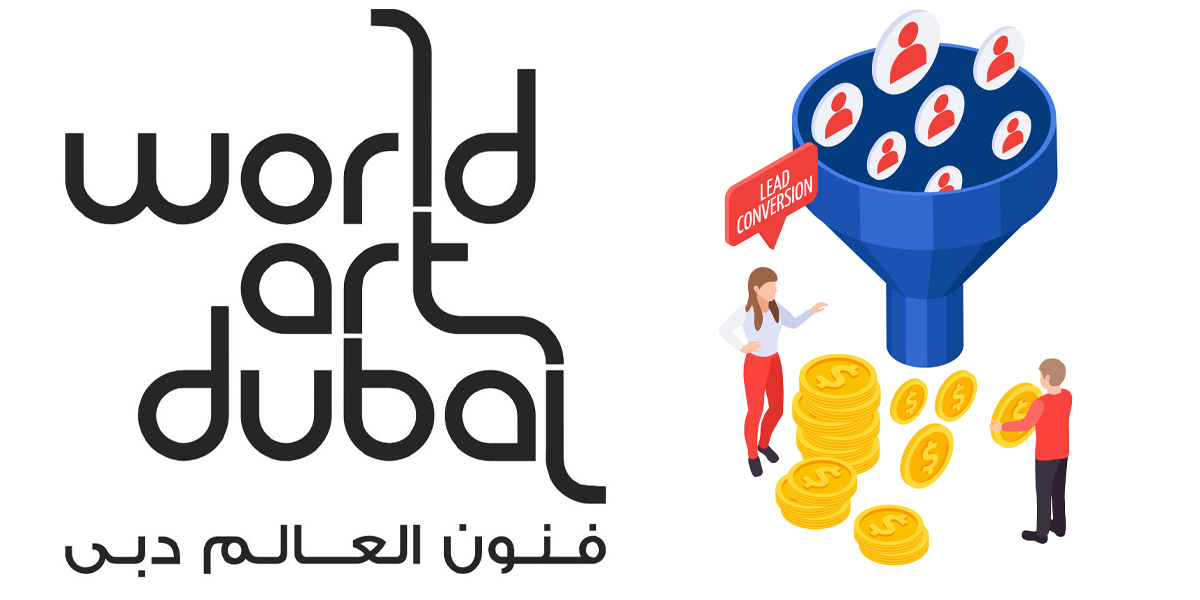
World Art Dubai brings together artists, galleries, collectors, curators, buyers, interior design professionals, hospitality brands, and art lovers under one roof. That kind of footfall creates a major opportunity, but opportunity alone does not guarantee revenue. Many exhibitors spend heavily on booth design, logistics, travel, staffing, and marketing, yet leave the event with only a stack of business cards, a few casual conversations, and no clear path to conversion.
The real difference between a busy stand and a profitable stand often comes down to one thing: smart lead capture.
If people visit your space, engage with your artworks, ask questions, and show genuine interest, that energy must be translated into structured sales action. Without a system, warm prospects turn cold. With the right process, every meaningful interaction can become a qualified lead, a follow up conversation, and eventually a sale.
This article explains, step by step, how to turn footfall into sales at World Art Dubai with smart lead capture. It is designed to be easy to understand and practical to implement for artists, galleries, art consultants, and exhibitors who want better results from every exhibition day.
Why Footfall Alone Is Not Enough
A crowded stand feels exciting. It creates momentum, social proof, and visual interest. But footfall is only the first stage of the sales journey. If you do not identify who your visitors are, what they want, and how interested they are, you cannot build a reliable post event sales pipeline.
At a show like World Art Dubai, visitors come for different reasons. Some want to buy immediately. Some are discovering new artists. Some are comparing options before making a decision. Some may be looking for art for hotels, offices, or residential projects. Others may simply be browsing without purchase intent.
If your team treats every interaction the same way, you will waste time on the wrong people and miss real buyers. Smart lead capture helps you separate casual interest from serious intent.
What Smart Lead Capture Really Means
Smart lead capture is more than collecting names and phone numbers. It is a structured method of gathering useful information during or immediately after each visitor interaction so that your follow up becomes timely, personal, and sales focused.
A strong lead capture system should help you answer these questions:
Who visited your stand?
You need their basic contact details such as name, email, phone number, company name, and job role where relevant.
What interested them?
Did they like a specific painting, sculpture, style, collection, or price range? Did they ask about commissions, bulk buying, licensing, or delivery?
How serious are they?
Were they ready to buy now, interested for later, or just exploring?
What action should happen next?
Should you send a catalogue, a price list, an artist profile, a meeting invite, or a limited time offer?
Once you capture these details correctly, your sales process becomes sharper and more effective.
Step 1: Start with Clear Sales Goals Before the Event
Before you think about lead forms or scanners, define what success looks like for your brand at World Art Dubai.
Your goals might include:
- Selling original artworks on site
- Booking private viewings after the event
- Finding gallery partners
- Generating commission inquiries
- Building relationships with interior designers
- Attracting hospitality and corporate buyers
- Growing a collector database
Each goal requires a slightly different lead capture approach. For example, an art collector needs a different follow up than a hotel procurement manager. When you know your objectives in advance, your team can ask better questions and record better information.
This is also the stage where your stand strategy matters. A well-planned booth created by an Exhibition Stand Design and Fabrication Company in Dubai can support visitor flow, visibility, product presentation, and interaction zones that make lead capture easier and more natural.
Step 2: Design Your Stand for Conversations, Not Just Attention
A visually attractive stand draws people in, but a smart stand keeps them engaged long enough for meaningful conversation. If your booth is beautiful but difficult to navigate, noisy, cluttered, or poorly staffed, you will lose leads.
Your stand should support these visitor actions:
- Stopping to look
- Entering comfortably
- Browsing artwork categories
- Asking questions
- Sharing contact details
- Viewing pricing or digital catalogues
- Booking a follow up discussion
Think in zones. Have a visual attraction zone at the front, a discussion zone for staff interaction, and a lead capture zone where details can be collected smoothly.
This is where thoughtful Exhibition Stand Design and Fabrication in Dubai becomes valuable. The layout should not only showcase art but also create a professional journey from curiosity to conversion.
Step 3: Train Staff to Identify Buying Signals
Your team plays a central role in converting footfall into sales. Many exhibitors focus on product knowledge but forget sales observation skills. At an art exhibition, subtle signals matter.
A visitor may be highly interested if they:
- Return to the same artwork multiple times
- Ask about pricing, dimensions, or certificates
- Inquire about delivery, framing, or installation
- Discuss where the artwork could be placed
- Ask if similar pieces are available
- Mention a project timeline
- Take detailed photos or notes
- Ask about commissions or customization
Train your staff to notice these signals and respond with purpose. Instead of a general thank you, they should move the interaction forward by asking qualifying questions such as:
- Are you looking for a personal collection or a commercial space?
- What kind of size or style are you considering?
- Is this for an immediate requirement or a future project?
- Would it help if I shared the catalogue and price sheet with you?
These questions do two things. They qualify interest and open the door to lead capture.
Step 4: Use Digital Lead Capture Tools Instead of Loose Notes
Manual note taking is slow, messy, and often incomplete. Business cards can get mixed up. Handwritten details can be hard to read. Smart lead capture works best when it is digital, fast, and standardized.
You can use:
- Tablet based lead forms
- CRM connected event apps
- QR code forms
- Badge scanning tools if available
- Mobile based team entry systems
- Digital catalogues with gated access
A good digital lead capture form should be short but useful. It can include:
- Name
- Phone number
- Country or city
- Buyer type
- Artwork or category of interest
- Budget range
- Purchase timeline
- Notes from conversation
- Follow up priority
Keep it simple enough to complete in under a minute. The goal is not to slow the conversation but to make future communication far more effective.
Step 5: Qualify Every Lead with a Simple Scoring Method
Not all leads deserve the same level of urgency. A smart system ranks them so your post event action becomes focused.
You can use a simple lead scoring structure:
- Hot leads: These visitors showed clear purchase intent, asked about pricing or delivery, and are likely to buy soon.
- Warm leads: These visitors were interested, engaged with specific pieces, and asked relevant questions, but may need more time.
- Cold leads: These visitors had general interest but no immediate buying signs.
This scoring can be added as a quick field inside your lead capture tool. It helps your sales team prioritize follow up after the event. Hot leads should not wait several days for a response. They need same day or next day communication.
Step 6: Capture Context, Not Just Contact Details
A name and phone number alone do not help much after a long exhibition day. The real value comes from context.
For each lead, record specific details such as:
- Which artwork they liked
- What budget they mentioned
- Whether they are a collector, designer, gallery owner, or buyer
- What concern they raised
- What material they requested
- What next step was promised
For example, a note like interested in abstract canvas is weak. A note like interested in 120 x 90 abstract blue gold piece for hotel lobby in Downtown Dubai, requested pricing and installation support is powerful.
Context allows you to send a follow up that feels relevant and professional rather than generic.
Step 7: Offer a Value Exchange for Data
People are more willing to share their details when they receive something helpful in return. The exchange should feel natural and useful, not forced.
At World Art Dubai, you can offer:
- A digital catalogue
- Price list for selected collections
- Artist profile brochure
- Early access to new works
- Private viewing invitation
- Commission consultation
- Design placement advice
- Special post event offer
When visitors see a clear benefit, lead capture becomes easier. It also helps position your brand as organized and serious.
Make sure the offer matches the visitor type. A collector may want provenance and artist background. An interior designer may want sizes, finish options, and commercial pricing. A hospitality buyer may want project suitability and delivery timelines.
Step 8: Use QR Codes Strategically
QR codes are a simple and effective way to support smart lead capture, but only when used properly.
You can place QR codes on:
- Stand panels
- Artwork tags
- Reception desks
- Brochures
- Digital screens
- Business cards
The code can direct visitors to:
- A lead form
- A downloadable catalogue
- A WhatsApp inquiry link
- A private collection page
- A booking page for consultations
Make the purpose clear. Instead of just showing a QR code, add a message such as Scan to receive the full catalogue or Scan to book a private art consultation. Clear instructions increase scans and improve lead quality.
Step 9: Follow Up Fast While Interest Is Still High
The biggest mistake many exhibitors make is waiting too long after the event. By then, the visitor has seen hundreds of artworks, spoken to many exhibitors, and returned to daily life. Your brand may no longer be top of mind.
A strong follow up timeline looks like this:
- Within 24 hours: Send a thank you message with the promised information and a reference to the artwork or discussion.
- Within 48 to 72 hours: Follow up with a tailored recommendation, price details, or next step proposal.
- Within one week: Re engage with a useful reminder, limited availability update, or meeting invitation.
The tone should be helpful and personal, not pushy. Mention the exact artwork or need discussed. Show that you listened.
Step 10: Align Marketing and Sales After the Event
Lead capture is not complete when the event ends. The handover process matters. Your sales and marketing efforts should work together to move leads through the funnel.
For example:
- Hot leads go to immediate one to one follow up
- Warm leads enter a personalized nurture flow
- Cold leads receive broader brand updates and future invitations
You can segment your list based on:
- Buyer type
- Interest category
- Budget
- Location
- Purchase readiness
This helps you avoid sending the same message to everyone. Better segmentation leads to better conversion.
Step 11: Measure What Actually Worked
To improve results at future events, review your lead capture performance carefully.
Track metrics such as:
- Total footfall at the stand
- Number of leads captured
- Lead to conversation ratio
- Hot, warm, and cold lead distribution
- Follow up response rate
- On site sales
- Post event sales
- Most viewed artworks
- Most common buyer questions
- Highest converting visitor types
These insights show what to improve in your stand design, staffing, messaging, and follow up process next time.
Common Lead Capture Mistakes to Avoid
Even experienced exhibitors make preventable errors. Watch out for these common issues:
- Asking for details too early: Build interest first. Lead capture should come naturally after value is created.
- Collecting too much information: Long forms reduce completion rates. Keep it focused.
- Failing to train the team: A great tool cannot fix poor conversations.
- No follow up system: Capturing leads without a structured follow up plan wastes the opportunity.
- Treating every lead the same: Segmentation and prioritization are essential.
- Ignoring non immediate buyers: Some buyers take time. Good nurturing can still turn them into revenue later.
Why Smart Lead Capture Matters More in the Art Industry
Art buying is emotional, visual, and often considered carefully over time. Unlike impulse retail, many art purchases involve thought, discussion, and context. That means the exhibition itself is only one part of the sales journey.
A visitor may discover your work at World Art Dubai, review your collection later, consult family or clients, compare options, and then decide. If you fail to capture and manage that lead properly, the journey ends before the sale begins.
Smart lead capture helps you extend the exhibition experience beyond the event floor. It keeps the relationship alive, supports buyer confidence, and improves the chances of conversion.
World Art Dubai offers visibility, credibility, and valuable footfall. But real business results come from what you do with that attention. Smart lead capture helps you turn casual interest into actionable opportunities and booth traffic into measurable sales.
The process is simple when broken down step by step:
- Set clear sales goals
- Design the stand for interaction
- Train staff to spot buying signals
- Use digital capture tools
- Qualify leads properly
- Record useful context
- Offer value in exchange for data
- Follow up quickly and personally
- Measure performance and improve
When these steps work together, your exhibition investment becomes far more productive. Instead of leaving with vague memories of busy days, you leave with a qualified pipeline, stronger relationships, and a clear route to revenue.
Strokes Exhibits Dubai – Top Exhibition Stand Design Company in Dubai UAE

If you want your brand to do more than attract attention at World Art Dubai, the right exhibition partner can make a real difference. From strategic booth planning to visitor friendly layouts that support engagement and lead generation, every detail matters when your goal is to convert footfall into sales.
Connect with Strokes Exhibits Dubai – Top Exhibition Stand Design Company in Dubai UAE to create an exhibition presence that is visually powerful, professionally executed, and built for results. Take the next step toward a smarter, high converting exhibition stand and make every visitor interaction count.
Get Your Custom Stand Quote Now!
Start with a Free Stand Quote! Transform Your Space with Us


